
𝗚𝗿𝗲𝗮𝘁 𝗟𝗲𝗮𝗱𝗲𝗿𝘀 𝗗𝗼𝗻’𝘁 𝗕𝗹𝗮𝗺𝗲
Leaders,
Let’s talk about something that can either stunt your team’s growth or supercharge it: how you handle mistakes.
Great leaders don’t treat every misstep the same. And it’s not about sugarcoating failure or ignoring errors. It’s about discerning the difference on purpose.
Here’s the mindset shift:
● Failure is an event.
● Error is a moment.
They may look alike on the surface, but the best leaders treat them differently because each calls for a different kind of leadership response.
Failure: A Group Activity
When something major goes wrong, it’s tempting to search for who’s to blame. But high-level leaders know that failure is rarely one person’s fault. It’s a breakdown of systems, misaligned expectations, missed cues, and group dynamics.
That’s why the best leaders gather the team to debrief failure together. They ask:
● “What went wrong?”
● “What did we miss?”
● “How can we do this better next time?”
The goal isn’t to point fingers; it’s to build collective insight. This makes the team stronger, more self-aware, and more invested in future wins.
Treating failure this way encourages accountability without shame. It invites growth without guilt.
Error: A Personal Matter
Mistakes, on the other hand, are usually individual: a missed deadline, a miscalculation, a lapse in judgment.
These are best addressed privately. One-on-one. Calmly. Directly. Not to embarrass, but to correct, support, and guide.
Handled respectfully, these conversations often build trust and professional maturity. Your team member walks away knowing you care enough to correct, not condemn.
Your Leadership Lens Matters
Failing to distinguish failure from error often leads to confusion, misplaced blame, and crushed confidence.
But when leaders reframe:
● Failure becomes a learning detour.
● Error becomes a fillable pothole.
Neither is the end of the road, unless we choose to treat it that way.
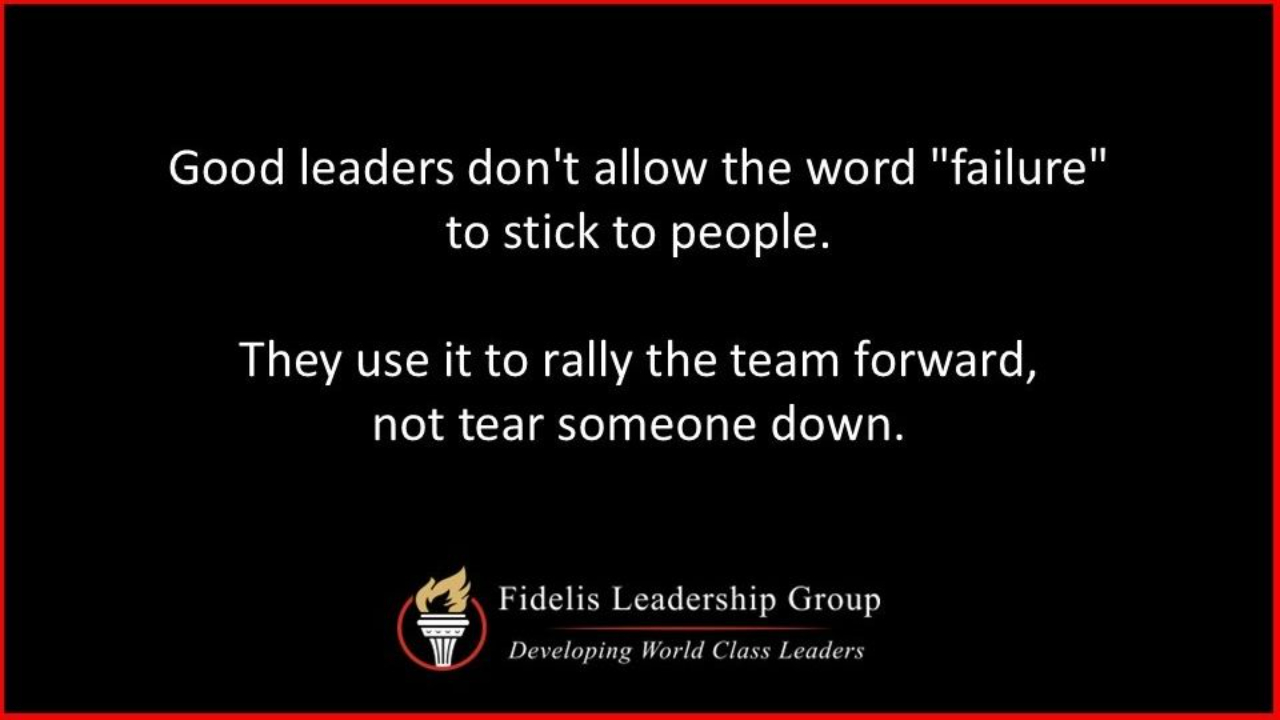
Good leaders don't allow the word "failure" to stick to people. They use it to rally the team forward, not tear someone down.
Leadership Lessons:
● Distinguish between failures (group) and errors (individual).
● Debrief failures with the team; discuss errors in private.
● Never define a person by their mistake. Define them by how they grow from it.
Critical Point: Let your team stumble but never let them stand alone in it. You’re not just leading a team. You’re building people. And that’s the mark of a legacy-minded leader.
Food for thought, Leaders.
Have a Great Day, and as always…
Go Forth & Lead Well!
Semper Fidelis,
Mike
Mike Ettore is an executive leadership coach, author, and keynote speaker based in Tampa, Florida.
